Office Renovation Cost Per Square Foot Revealed
In today's business environment, office renovation is not only a functional upgrade but also a strategic investment to enhance employee productivity and corporate image. We observe that in 2025, office renovation costs will show a steady upward trend due to fluctuating material prices, inflationary pressures, and green building trends. According to the JLL 2025 Office Fit Out Guide, the average office fit-out cost in the Asia Pacific region has reached USD 1,524 per square metre, equivalent to approximately USD 141 per square foot (approx. HKD 1,100). As a high-density commercial hub, Hong Kong's costs are even higher, averaging HKD 1,040-1,500 per square foot. Another report shows that the cost for a basic fit-out in Hong Kong is HKD 1,200-2,000 per square foot, while a mid-tier fit-out ranges from HKD 2,000 to 3,500. This article will demystify the composition of office renovation costs per square foot, the factors influencing them, and budgeting strategies to help business owners precisely control expenses and achieve efficient space transformation. Based on the 2025 reports from JLL, Arcadis, and Savills, this article provides reliable data covering cost structures, influential factors, material choices, regional variations, budgeting strategies, green building, economies of scale, and government subsidies. In Hong Kong, considering building density and regulatory requirements, renovations must be carefully planned to avoid extra correction costs.
First, understanding the cost structure is key
Office renovation costs can be broken down into design fees, construction fees, material fees, and miscellaneous fees. Design fees account for about 8-12% of the total, approximately HK$80-150 per square foot, covering floor planning, 3D rendering, and supervision services. Construction fees are the core, representing about 40-50%, or HK$400-600 per square foot, which includes demolition, plumbing and electrical modifications, and carpentry installation. Material fees make up 30-35%, or HK$300-500 per square foot, depending on the environmental protection grade. Miscellaneous fees, such as cleaning and final inspection, account for about 5-10%, or HK$50-100 per square foot. Overall, the average cost of office renovation in Hong Kong is HK$800-1,500 per square foot, subject to adjustments based on scale and style. According to the Savills Projects Office Fit Out Guide 2025, professional fees include architect and engineer services, while furniture installation and mechanical & electrical (M&E) engineering should also be calculated separately. For instance, within design fees, 3D rendering can precisely preview effects and reduce later changes; construction fees cover HVAC system installation to ensure ventilation complies with Labour Department requirements. Material fees are affected by the global supply chain, with stone prices rising by 15% in 2025, hence selecting local recycled materials is recommended. Miscellaneous fees include inspections and cleaning; neglecting them may lead to extra expenses. The overall cost structure needs to be adjusted according to the scale of the project; small offices have high fixed costs, resulting in a higher cost per square foot.
The primary factor influencing cost is space type and scale
Small offices (under 500 sq. ft.) have higher fixed costs, meaning the cost per square foot can reach HK$1,200 or more; large spaces (over 2,000 sq. ft.) can bring it down to HK$900, benefiting from economies of scale. Open-plan layouts save 15-20% compared to traditional partition walls because they reduce wall construction. Another key factor is material selection: standard PVC flooring is HK$50-80 per square foot, whereas upgraded carpets are HK$100-150; LED lighting systems cost HK$30-50 per square foot, which is far lower than the HK$80 for traditional fixtures. Green materials like low-VOC paints have a 10% higher initial cost, but their long-term energy-saving return is significant. The type of space has a clear impact; tech company offices need to integrate smart systems, adding HK$100-200 per square foot, while creative spaces focus on aesthetics, leading to higher material costs. Economies of scale are significant in large projects, where bulk purchasing of materials can reduce prices by 15%. In Hong Kong, considering the age of buildings, older buildings require extra structural reinforcement, raising costs by 10-20%. A case study shows that a 1,000 sq. ft. tech office adopting a minimalist style had a total cost of about HK$1 million, or HK$1,000 per square foot, including smart system integration, which improved efficiency by up to 25%. In short, space type and scale are central to costs and must be tailor-planned according to needs.

Regional differences also cannot be ignored
In core districts of Hong Kong like Central or Tsim Sha Tsui, the cost per square foot rises by 20% due to high logistics and labor costs; in industrial areas of the New Territories or Kowloon, it can drop to HK$700-1,000. In 2025, affected by the supply chain, the price of imported stone has risen by 15%, so choosing local suppliers is recommended to control risks. Core districts face labor shortages, with hourly wages reaching HK$150-200, pushing up construction fees; outer districts are more affordable. The Arcadis 2025 China & Hong Kong Construction Cost Handbook shows that Hong Kong's overall construction cost is HK$1,000-1,500 per square foot, with obvious regional differences. For example, projects in Central require extra transportation costs, while the New Territories offer easier logistics. Considering building types, Grade A offices have high fit-out standards, leading to increased costs. In short, regional choice affects the budget, requiring a balance between rent and renovation.
Budget Optimisation Strategies
These include phased construction—handling basic engineering first and detailed decoration later—which can defer 20% of the expenditure. Choosing a one-stop contractor avoids multi-management, which can add 5% in administrative fees. Matching with professional partners through the Project-Connect platform can obtain transparent quotes and save an average of 10%. Phasing projects, such as doing plumbing and electricity first, then furniture, helps control cash flow. Government green building subsidies can reduce the cost by HK$50-100 per square foot. For example, applying for BEAM Plus subsidies covers energy-saving materials. In short, strategic optimization can achieve effective control.
Green Building Trends
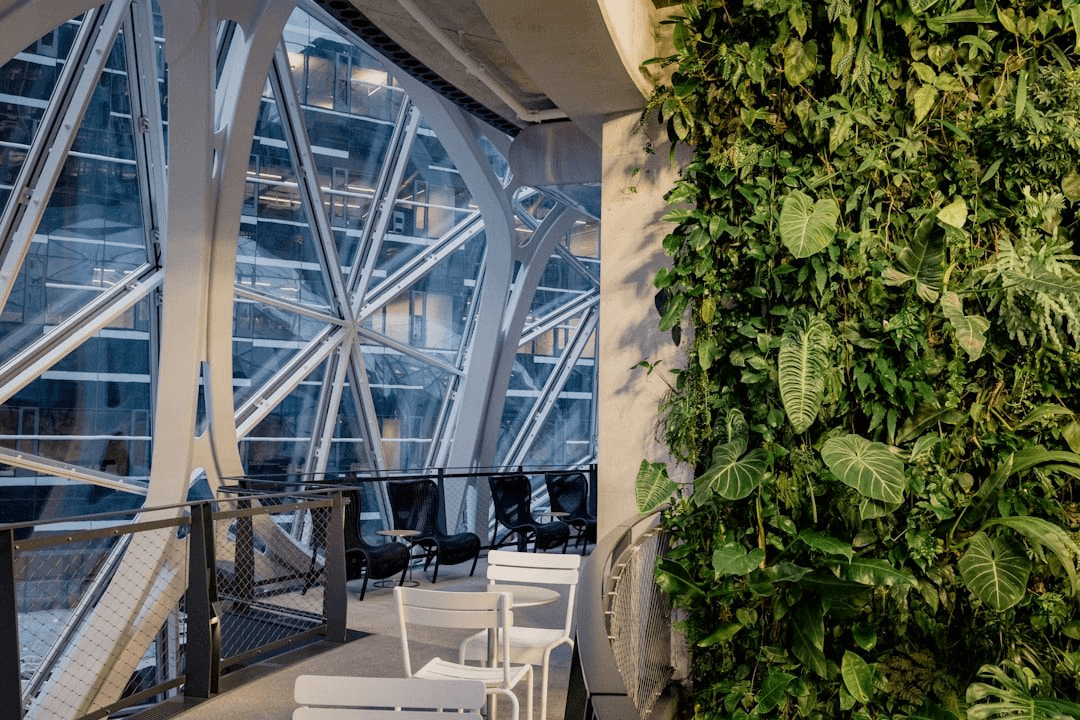
In 2025, green buildings are on the rise, using recycled materials to reduce carbon footprint. Although the cost is 10% higher, the energy-saving return reaches 20%. The Hong Kong Green Building Council promotes BEAM Plus, offering subsidies of HK$50-100 per square foot. For example, using low-carbon concrete and solar lighting. In short, green design yields long-term benefits.

Economies of Scale and Case Analysis
Large projects benefit from economies of scale, reducing costs by 15%. A case in point is a 1,000 sq. ft. office with a total cost of HK$1 million, which equals HK$1,000 per square foot. In short, analyzing cases helps with planning.
Government Subsidies
Apply for green building subsidies to reduce costs by HK$50-100 per square foot. The Hong Kong Environment Bureau provides funds covering energy-saving projects. In short, subsidies lower the threshold.
In conclusion, the cost of office renovation per square foot needs to be precisely calculated based on actual needs rather than blindly following market averages. Through systematic planning, companies can not only control their budgets but also construct efficient and sustainable spaces. Project-Connect gathers top-tier design and renovation resources to provide free cost evaluations.