The Impact of AI on Commercial Fit-out Design: The Dual Drive of Efficiency Revolution and Industrial Upgrading
Under the tide of digital transformation sweeping through the global business sector, commercial interior design (commercial scenarios such as offices, retail stores, industrial parks, and dining spaces) is undergoing a profound transformation led by Artificial Intelligence (AI) technology. Unlike residential renovation, commercial interior design faces pain points such as strict design standards, complex multi-department collaboration, high pressure on cost control, and tight project schedules, which are directly related to commercial operational efficiency and customer experience. The deep integration of AI technology not only achieves a leap in efficiency from the design end, but also brings breakthrough changes across the entire chain, including cost control, scenario adaptation, and industry ecology.

I. Revolution in Design Efficiency: From Days of Cycle to Minute-level Response
Traditional commercial interior design, from sketching to 3D modelling and rendering, and then to scheme adjustments, often takes several days or even weeks, with a high proportion of repetitive work. Through algorithm automation and data driving, AI multiplies the efficiency of the entire design process.
In the conceptual design stage, designers enter prompts like "modern minimalist office + open collaborative area + eco-friendly building materials" or "high-end retail store + immersive display + warm light atmosphere" to generate over a dozen visual schemes of different styles within minutes.
The most representative industry case comes from the Ant Group Design Center (Alibaba Group): In 2023, the "AI Store Design System" developed for Tmall Autocare compressed the design of a single store from the original manual process of 3-5 days to 30-40 minutes. As of June 2024, it has generated design schemes for over 6,300 stores nationwide, saving a cumulative total of HKD 18.27 million in design fees, with the average design cycle per store shortened by over 85%.

Image from The Wall Street Journal
Moving into the modelling and rendering stage, Autodesk AI built into AutoCAD 2025, and Blender's third-party plugins like Dream Textures and Cozy Auto-Texture can shorten hours of rendering to just over ten minutes. The American Society of Interior Designers (ASID) 2024 Outlook Report shows: 81% of interior designers have incorporated AI tools into their daily workflows, and 68% of respondents indicated that overall project efficiency has increased by 30% - 50%.
II. Cost and Risk Control: Data-Driven Fine Operations
AI budgeting tools automatically generate cost estimates based on multi-dimensional data such as project area, design style, local building material prices, and labour costs. The error rate has dropped from the traditional manual 10% - 15% to within 5%, and price fluctuations are tracked in real-time.
In terms of materials control and supply chain collaboration, the AI system connects to the ERP data of building material suppliers, automatically matches the most cost-effective materials, and plans the optimal procurement timing. Meanwhile, based on parameters such as wear resistance coefficient, formaldehyde emission, and installation difficulty, it recommends the most suitable materials for the scenario — for high-traffic retail spaces, composite flooring with a wear-resistant coefficient of ≥8000 revolutions is selected; for office spaces, EO-grade formaldehyde-free boards are chosen.
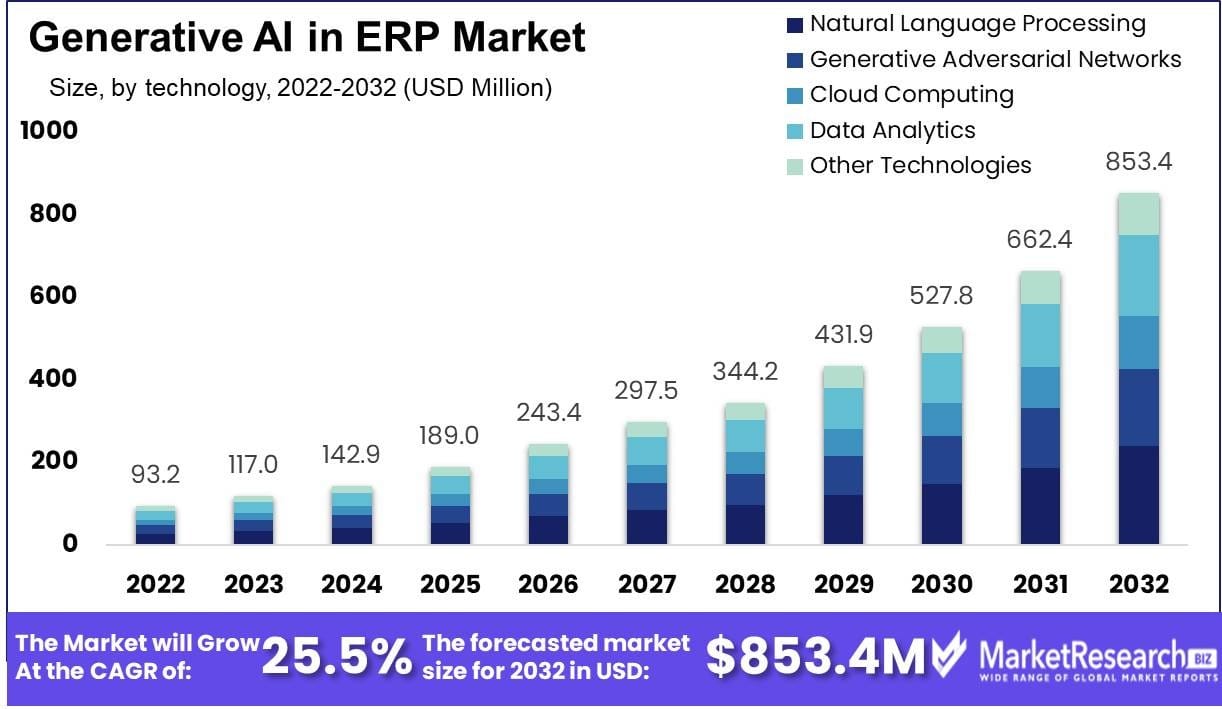
Image from ten ten
Regarding risk avoidance, based on algorithms trained on hundreds of thousands of historical drawings, AI can automatically detect whether fire passage widths, emergency evacuation distances, electrical loads, etc., comply with the "Code for Fire Protection Design of Buildings" GB50016-2014 (2018 Edition), resolving issues during the design stage that previously would only have been discovered during construction, reducing the rework rate by 60% - 70%.
III. Scenario Experience Upgrade: Accurate Balance of Personalisation and Functionality
AI integrates data such as corporate industry attributes, team size, remote working proportions, and customer profiles to generate highly fitting schemes. For example:
· Planning a flexible layout of 65% open workstations + 35% private phone booths for internet companies
· Optimising queuing flows for a boutique café based on customer flow heatmaps, shortening average waiting time by 42 seconds
Stylar.ai can analyze pedestrian flow heatmaps to ensure every square metre of space yields maximum commercial value; the AI ray-tracing features of Lumion 11.5 + Enscape 4.0 can simulate natural light changes at different times across all 365 days of the year, accurately determining window sizes and fixture layouts, thereby reducing office space lighting energy consumption by 28%.
Combined with VR technology, clients can "walk into" future commercial spaces during the design stage, making real-time adjustments to wall colours and furniture placement to prevent gaps in expectations.

IV. Transformation of the Industry Ecology: Role Evolution and Industry Upgrade
Designers have upgraded from "drafters" to "spatial strategists". Previously, 60% of their time was spent on modelling and quantity estimation; this is now handed over to AI, allowing designers to focus on:
· Spatialisation of brand narrative
· Employee well-being design (colour psychology + acoustic treatment)
· Cross-disciplinary aesthetic integration
The barriers to entry in the industry are changing in two directions:
· Entry becomes easier: Canva launched an AI interior design module in November 2024, allowing users with zero foundation to drag and drop to generate schemes
· High-end competition is fiercer: The annual salary of top designers has surged from HKD 800,000 to over HKD 2 million
The industrial chain achieves a closed-loop of data: design schemes are pushed with one click to the contractor's BIM model + bill of materials, and IoT sensors compare construction progress in real-time, automatically triggering an alarm if the error exceeds ±5mm.
V. Challenges and Responses: Finding Balance within Innovation
1. Risk of Homogenisation
Solution: Designers use AI schemes for only 30% of their reference, with 70% consisting of original hand sketches + exclusive brand elements
2. Copyright Disputes
In March 2025, the RIAA in the United States officially sued Midjourney for using 170,000 design drawings without authorization for its commercial model; the industry is awaiting the final ruling
3. Transformation Pressure on Practitioners
Recommendation: The Academy of Arts & Design of Tsinghua University and Tongji University have made "Prompt Engineering + AI Ethics" a compulsory course for the Class of 2025 Interior Design Masters
Human-Machine Collaboration Opens a New Era for the Industry
The impact of AI on commercial interior design has already gone beyond the tool level, triggering deep-seated changes across the entire industry chain. Over the next three years, the human-machine collaboration model of "designer-led + AI-assisted" will become the absolute mainstream.
AI handles 80% of repetitive work, while designers focus on 20% of high-value creativity. The multiplier effect of both will drive the production efficiency of China's commercial interior design to rank first globally by 2027.
For every practitioner, dancing with AI is not a multiple-choice question, but a question of survival. Only by actively embracing technology and adhering to human warmth within innovation can one become a space planner who defines the future in this wave of industrial upgrading.