Improving Clinic Operational Efficiency: Patient Flow and Healthcare Workflow Planning
The Hong Kong healthcare system is facing severe challenges from population ageing and resource pressures. According to the latest report by Our Hong Kong Foundation, the population aged 65 or above is projected to account for 35% of the total population by 2040. This leads to a dramatic increase in medical demand, making the operational efficiency of public and private clinics a critical issue. Another study conducted by the Hospital Authority (HA) shows that optimising patient flow and healthcare workflows can reduce waiting times by up to 20%, while increasing patient satisfaction and reducing healthcare staff stress by up to 15%. For instance, the SmartCare system developed by HKUST, which features a customisable triage mechanism to coordinate resource allocation and patient flow, has been proven to significantly shorten waiting times and improve overall efficiency. This article will delve into how to enhance clinic efficiency through scientific planning, providing practical recommendations suitable for public and private clinics in Hong Kong. The content will combine local regulations, international best practices, and the latest research, covering patient flow optimisation, healthcare workflow integration, and implementation strategies, with the aim of providing a reliable guiding framework for healthcare institutions to ensure service quality and sustainable development.

Patient Flow Planning
Patient flow refers to the complete path of a patient from arrival at the clinic to departure, including registration, waiting, consultation, and check-out. Effective planning not only reduces crowding, enhances safety and satisfaction, but also lowers infection risks. In Hong Kong's high-density environment, flow design is even more critical, such as avoiding crossing paths to prevent the spread of infection. According to the Hospital Authority's guidelines, clinic designs should comply with the Medical Clinics Ordinance (Cap. 343) to ensure wide corridors and barrier-free access, protecting patient safety. Research shows that optimising flow can improve patient experience by up to 25% and reduce medical errors.
Firstly, optimising the appointment system is a foundational step. Adopting online booking and automated reminders can reduce the no-show rate by 15%. For example, the Electronic Health Record Sharing System (eHealth) implemented by the Hospital Authority allows patients to pre-fill information, reducing registration time. This system not only provides lifelong electronic health records but also allows authorised healthcare providers real-time access to information, enhancing diagnostic accuracy and treatment efficiency. In practice, clinics can integrate eHealth with self-service registration kiosks, using biometric technology for identity verification, complemented by clear signage to guide patients to the waiting area. A case study from the University of Hong Kong-Shenzhen Hospital showed that improving outpatient processes successfully increased patient satisfaction and reduced operational costs.
The design of the waiting area must consider comfort and efficiency. Zone settings, such as separating emergency patients from routine ones, and installing digital display screens showing estimated waiting times can reduce anxiety. According to a system dynamics modeling study, public hospitals can significantly enhance operational efficiency through resource allocation optimisation. In Hong Kong, considering space constraints, waiting areas should adopt modular furniture for easy layout adjustment. The consultation process should be smooth: from the nurse station for measuring vital signs to the doctor's consultation room, avoiding multiple movements for patients. Hong Kong research shows that simulation software like queueing theory models can predict peak periods to adjust layouts and reduce bottlenecks. For instance, the KWC Hospital Command Centre uses real-time data visualisation to implement sustainable improvements, optimising patient flow and enhancing operational efficiency.

The check-out area should be placed at the exit, integrating payment systems to support electronic wallets and speed up departure. In the post-pandemic era, contactless payment has become the standard, reducing infection risks. According to the Department of Health's infection control guidelines, clinics need to ensure that flow designs comply with ventilation and social distancing requirements. Furthermore, incorporating elements of artificial intelligence (AI), such as AI-driven patient flow optimisation, can shorten hospital stays and improve throughput. In Hong Kong, private clinics can draw on the experience of public institutions through the eHealth App, allowing patients to manage their health records and enhance overall flow efficiency. These measures not only increase patient satisfaction but also reduce the workload of healthcare workers, achieving sustainable operations.
Healthcare Workflow Planning
Healthcare workflows involve the task allocation and collaboration among doctors, nurses, and administrative staff. Optimisation can increase productivity and reduce errors. In Hong Kong, the shortage of healthcare personnel makes workflow planning even more urgent, with the goal of balancing workloads and integrating technology. According to the 2025 Policy Address, Hong Kong will expand data sharing, electronic health records, and telemedicine to address manpower gaps. Research shows that optimising workflows can shorten patient turnaround times by up to 20%.
Daily morning huddles are key. The healthcare team reviews the day's schedule to predict demand, such as preparing resources for chronic disease patients. Task allocation should be clear: nurses handle preliminary assessments, doctors focus on diagnosis, and administration handles paperwork. Research shows that this division of labor can shorten patient turnaround times. For example, smart wards use electronic displays and paperless workflows to provide real-time patient information, enhancing safety. Integrating Electronic Health Record (EHR) systems boosts efficiency, allowing healthcare staff instant access to data and reducing paperwork. The case of the University of Hong Kong-Shenzhen Hospital shows that queueing theory models optimise departmental services and reduce waiting.
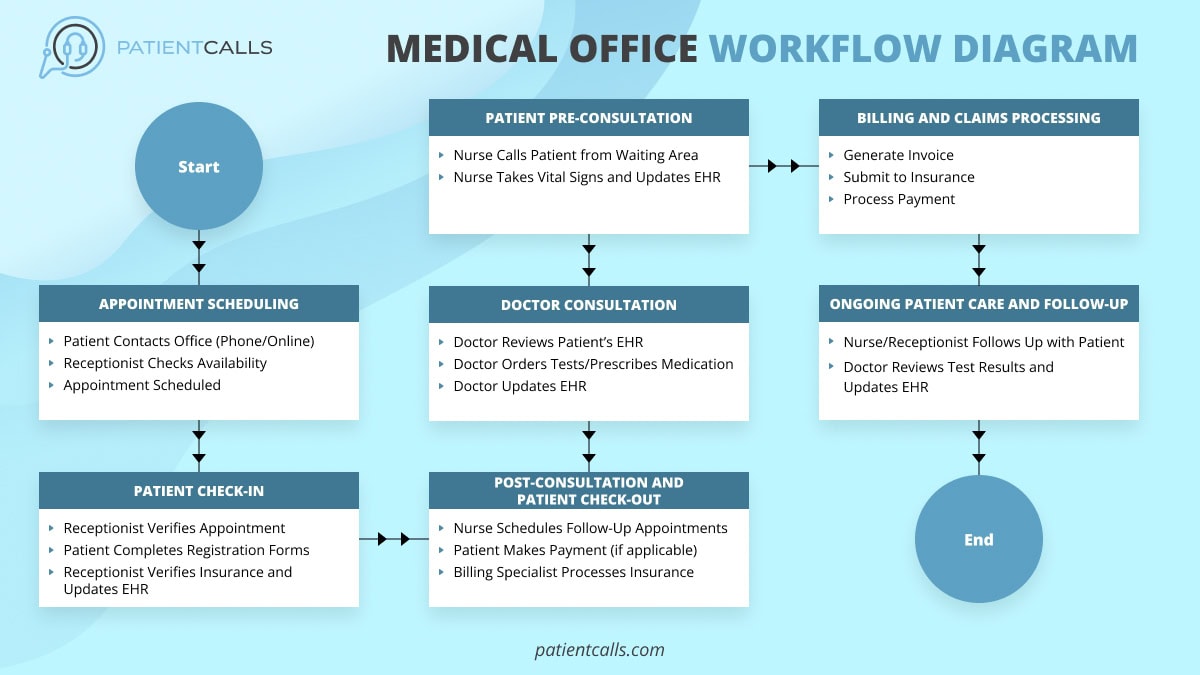
Healthcare workflow diagram showing team collaboration and task allocation
Training healthcare staff to use technology, such as mobile apps to track patient status, ensures seamless handovers. The eHealth Pro app provides secure access to electronic health records, supporting daily workflows. Peak period management must be flexible. Increasing shifts or cross-departmental support, as shown in a Hong Kong emergency department study, demonstrates that simulation-optimised staffing can lower costs. Regularly assessing workflows using KPIs like patient satisfaction and turnaround rates helps adjust plans. The Hospital Authority's simulation training, including Team Resource Management for doctors and nurses, has reached its target of 619 training sessions.
Furthermore, incorporating AI into clinical practice can improve EHR security and identify compliance risks. In 2025, smart healthcare upgrades in Hong Kong allow nurses to save time and automatically generate visual trend charts for doctors to track patient progress. The CUHK Medical Center has achieved savings and efficiency gains through smart systems, becoming Hong Kong's first smart hospital. These innovations not only relieve healthcare pressure but also enhance service quality, addressing the challenges of an ageing population.
Integrated Implementation Recommendations
Patient flow and healthcare workflows must complement each other. Using simulation tools to predict outcomes ensures designs comply with Hong Kong building and healthcare regulations, such as the Private Healthcare Facilities Ordinance (Cap. 633). Introducing patient feedback mechanisms, such as questionnaires, allows for continuous improvement. Although the initial investment in technology is high, it can save 20% in operational costs in the long run. For example, through system dynamics modeling, public hospitals can improve resource allocation and enhance efficiency.
During implementation, it is recommended to start with small-scale pilots, such as a single clinic department, to monitor effectiveness. Drawing on Jacobs' public hospital design guidelines, focus on patient safety and operational efficiency. In addition, comply with infection control guidelines to ensure ventilation and material selection meet standards. Government policy support, such as the 2025 Strategic Framework, encourages cross-sector data sharing and AI applications. Through these measures, clinics can achieve comprehensive optimisation.

In conclusion, enhancing clinic efficiency requires systematic planning of patient flow and healthcare workflows, combining technology and teamwork. In Hong Kong, this move not only improves services but also addresses growing healthcare demands. When implementing, it is recommended to start with small-scale pilots to monitor effectiveness. In the future, with the deeper integration of AI and electronic systems, Hong Kong healthcare will move towards a more efficient and sustainable model.