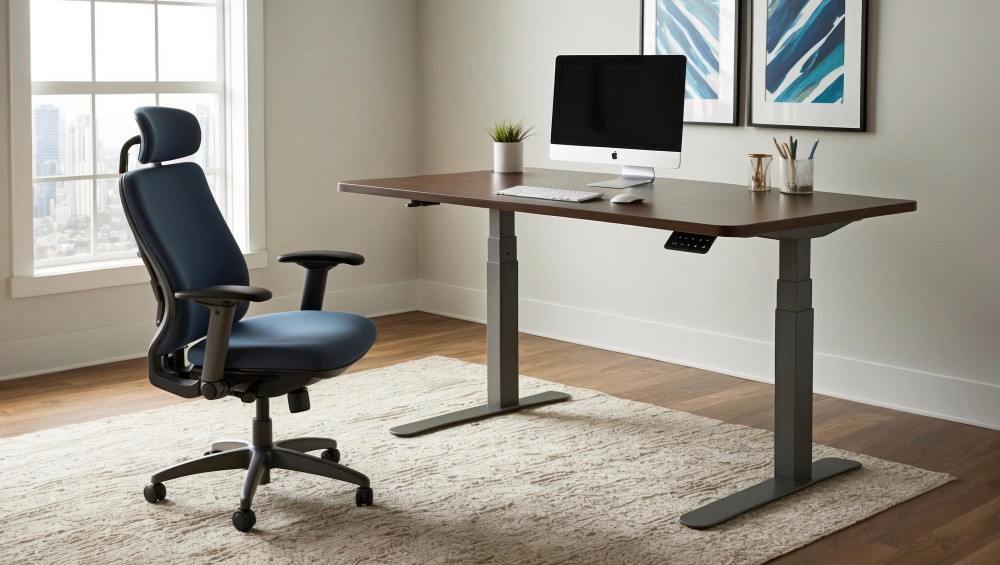
Office Lighting Design Guide: Lux, Colour Temperature, UGR—Why These Three Numbers Determine Employee Efficiency?
Office lighting design is often regarded as the final step in decoration. However, in reality, insufficient lux, colour temperature deviation, or glare issues can directly affect employees' concentration, cause eye strain, and impact productivity. Based on engineering data, this article analyses three key lighting parameters to help enterprises make scientific decisions in lighting design.
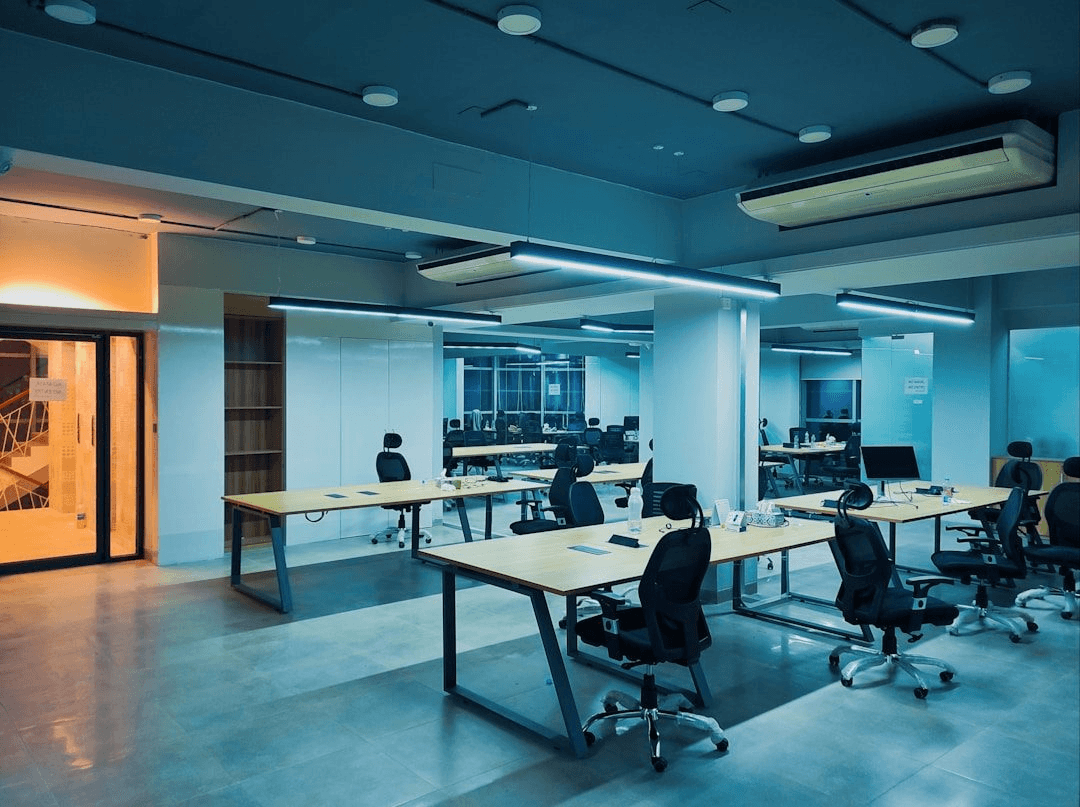
Office Lighting Design — Precise Lux and Colour Temperature Enhance Work Efficiency
1. Lux: How Bright is Bright Enough?
Lux (lx) is the unit of illuminance, measuring the luminous flux per unit area. Hong Kong's current office lighting design standards refer to the CIBSE (UK) and IESNA (US) specifications. The main standards are as follows:
General office desk: 300–500 Lux (minimum recommended value 300 Lux, comfortable value 500 Lux)
Meeting room: 300–500 Lux
Reception lobby: 200–300 Lux
Corridor/Passageway: 100–150 Lux
Drafting room/Precision work: 500–750 Lux
Common error: Many office designs have insufficient lux (only 200–250 Lux), and employees working in a dim environment for a long time are prone to eye fatigue. The other extreme is being too bright (over 750 Lux), where strong light reflects on display screens to form glare, which also affects work.
2. Colour Temperature (Kelvin): Cool White vs Warm White, Which is Better for Offices?
Colour temperature is expressed in Kelvin (K). The lower the value, the warmer and more yellow the light; the higher the value, the cooler, whiter, and bluer the light. Commonly used colour temperature ranges in offices:
3,000K (Warm White): Warm and comfortable feel, suitable for reception areas, pantry/break areas, and high-end VIP rooms, but not suitable for work environments requiring concentration.
4,000K (Neutral White): Clear, bright, yet not glaring. It is the most commonly used colour temperature in office areas, balancing efficiency and comfort.
5,000K–6,500K (Cool White/Daylight): High definition, suitable for design studios or drafting review areas that require precise colour differentiation, but prolonged use can easily cause eye strain.
Recommendation: Generally use 4,000K consistently for the office, and partially use 3,000K warm light in the reception area to enhance the brand's warmth. Avoid mixing multiple colour temperatures in the same space (e.g., some fixtures at 4,000K and others at 3,000K), which creates a cluttered visual effect.
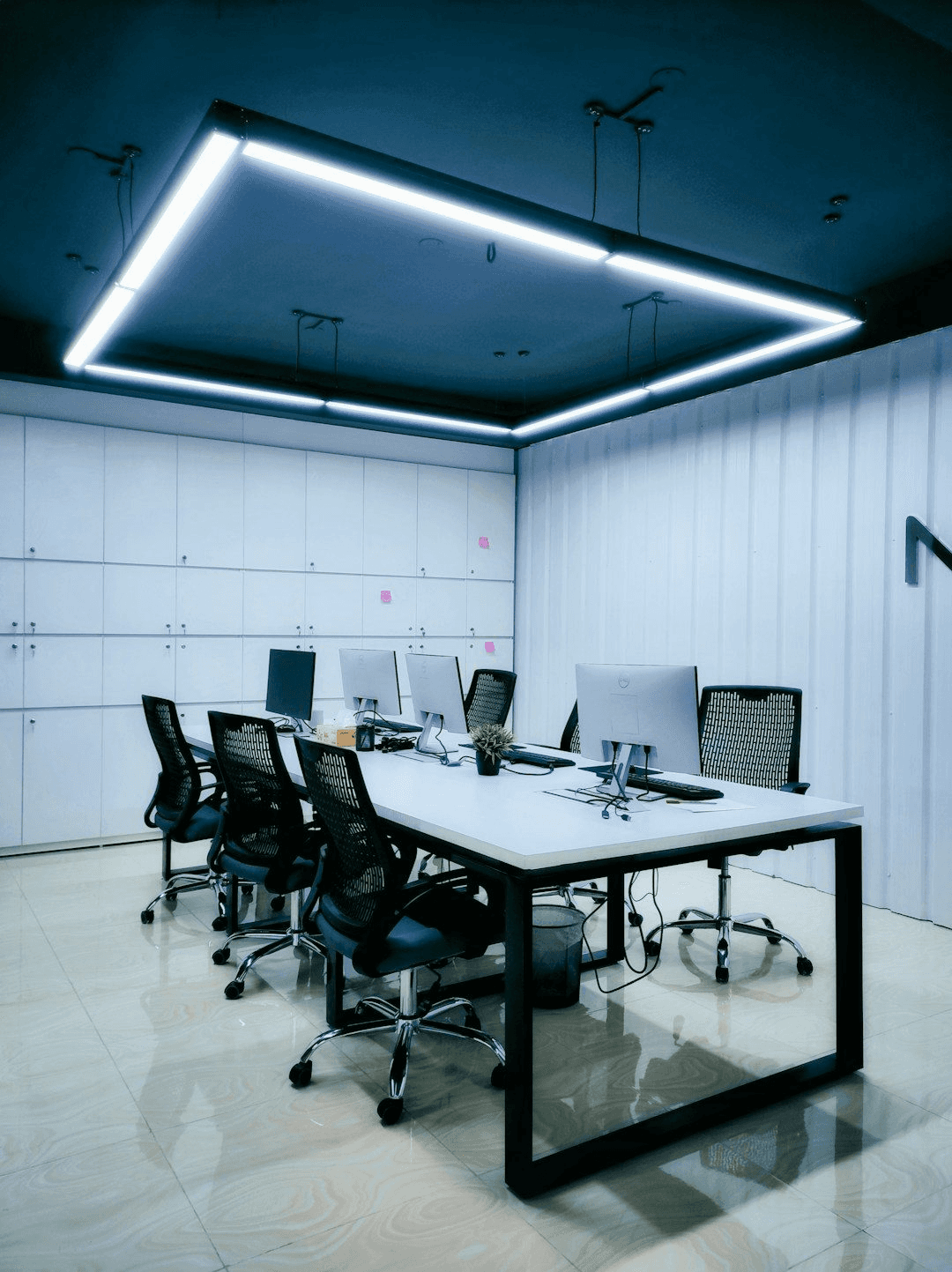
Meeting Room Lighting Design — Glare-Free Uniform Illumination is the Foundation of Professional Communication
3. UGR Value: The Key Indicator for Glare Control
UGR (Unified Glare Rating) measures the psychological discomfort caused by luminaires to the human eye. The lower the value, the more comfortable. Standard references:
UGR ≤ 19: Recommended standard for general offices (EU EN 12464-1)
UGR ≤ 16: Recommended for precision work, CAD design workstations
UGR ≤ 22: For non-precision work areas such as corridors and warehouses
If luminaires exceeding UGR 22 are installed in an office, employees are prone to discomfort when working in front of screens for long periods. When purchasing LED troffers or linear lights, you should request a UGR test report (not self-declared values by the manufacturer) from the supplier.
4. Common Luminaire Types and Applications in Hong Kong Offices
LED Troffer
Cost: $150–$250/set, suitable for standard office areas. Modern specifications should select deep louvre anti-glare troffers, UGR ≤ 19, colour temperature 4,000K, and colour rendering index Ra ≥ 80.
Linear Light
Cost: $300–$500/metre, suitable for high-end office corridors and ceiling light troughs. The linear design provides visual continuity, and combined with plasterboard light troughs, it can create indirect lighting effects to reduce glare.
Downlight
Cost: $100–$300/set, suitable for reception areas and corridors. When purchasing, confirm the anti-glare angle (shielding angle ≥ 30°) to avoid direct glare into the eyes.
DALI Intelligent Dimming System
On the premise of adjustable lux and colour temperature, the DALI system supports automatic adjustment of lighting scenes according to time periods (e.g., working mode 4,000K/400Lux, meeting mode 3,500K/300Lux), with an additional cost of $3,000–$8,000/loop, suitable for large enterprise offices.
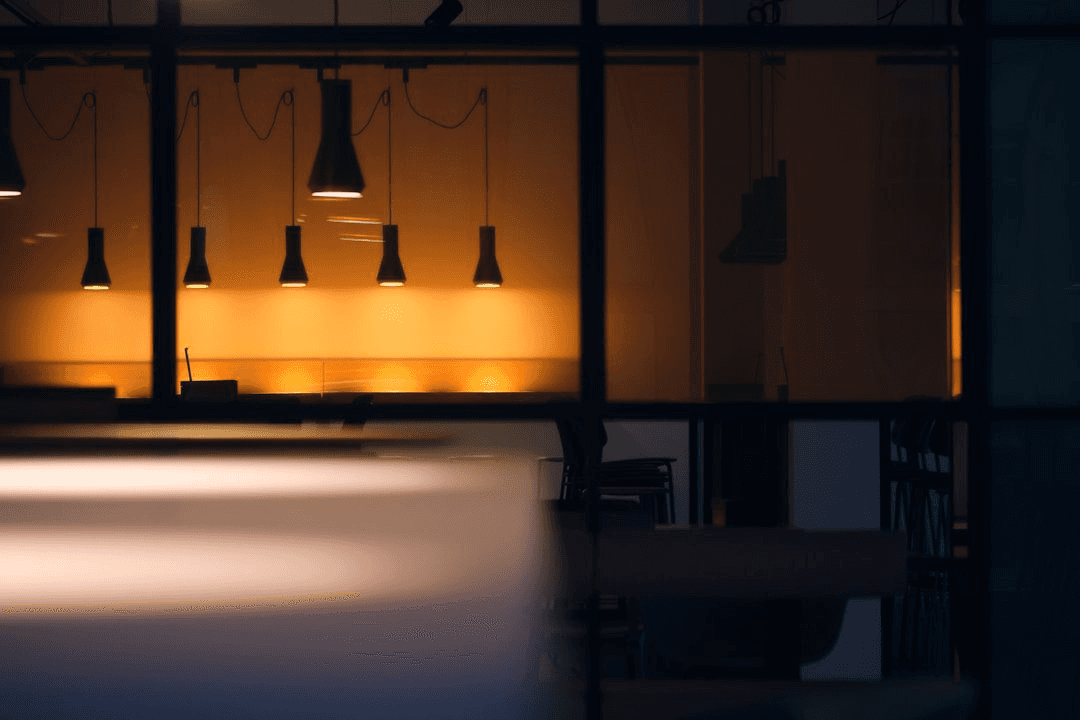
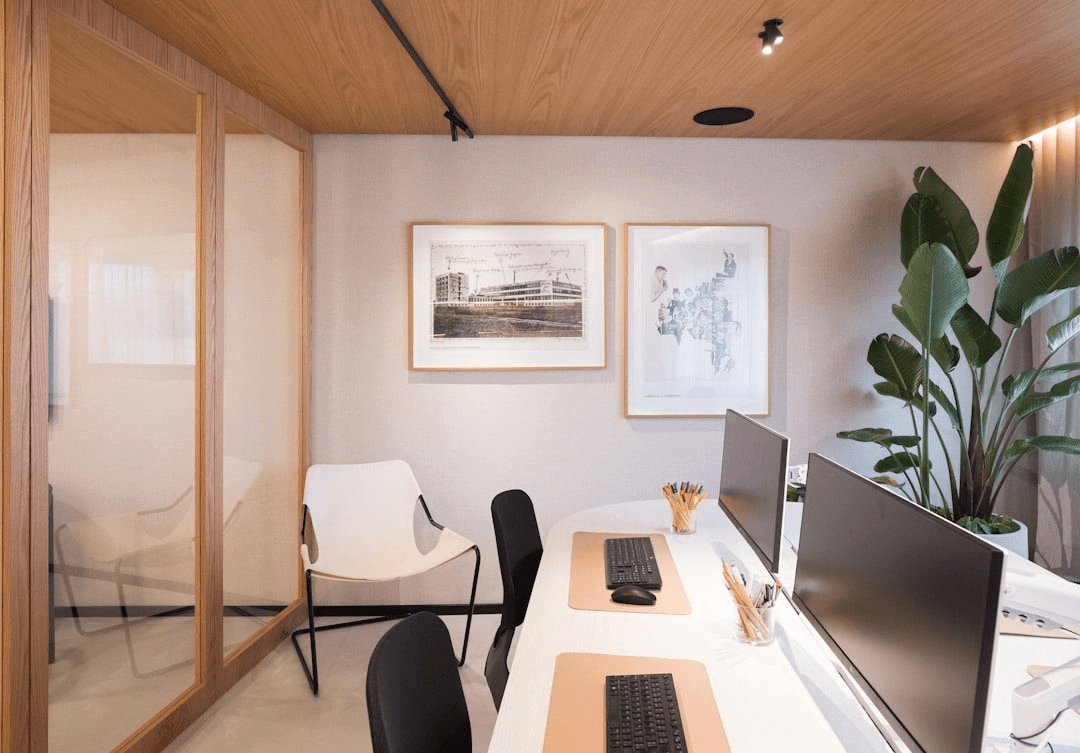
Office Open Work Area — Uniform and Comfortable Lighting Design Enhances Work Efficiency
5. Common Mistakes in Lighting Design
Mistake 1: Equidistant arrangement of fixtures, without considering the actual desk layout. Fixtures should be centred around working desks to ensure uniform desk lux, rather than being installed purely according to the ceiling grid.
Mistake 2: Using single-scene lighting in meeting rooms, with no scene transition. It is recommended to set up at least two scenes in meeting rooms (presentation mode/discussion mode), controlled by dimmer switches or scene panels, to flexibly cope with different usage needs.
Mistake 3: Ignoring the Colour Rendering Index (CRI/Ra). Offices are recommended to use luminaires with Ra ≥ 80; for display purposes (such as the reception brand wall), Ra ≥ 90 is recommended to ensure accurate colour reproduction. When BW Design Centre conducts lighting design, all luminaire specifications are clearly marked in the design drawings, including lux calculations and UGR test reports.